
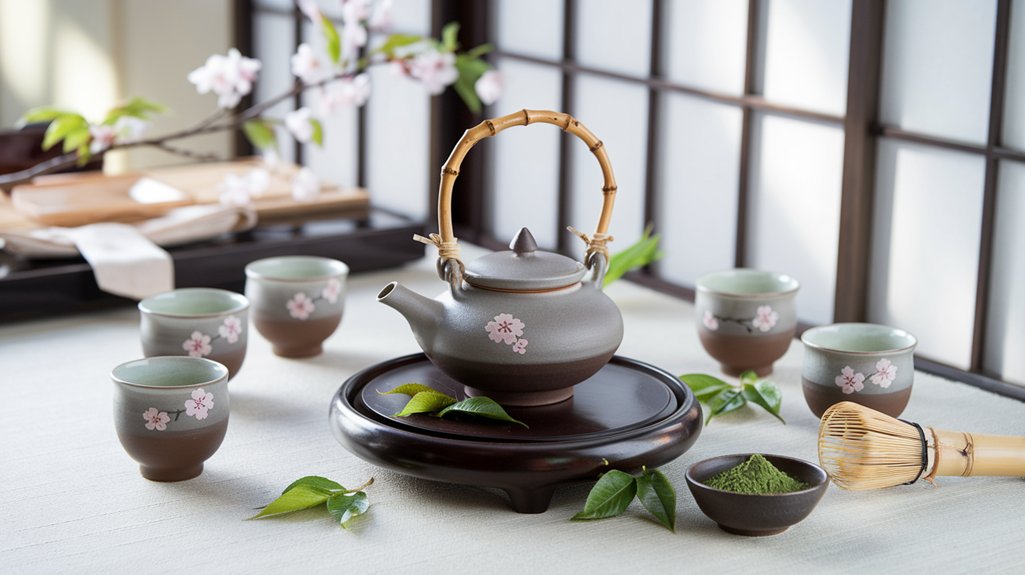
You’ve probably heard about the many benefits of green tea, but do you know how to brew it for the best flavor?
It’s not just about pouring hot water over leaves. First, you need to carefully control the temperature of the water, allowing it to cool just enough after boiling.
Then, the steeping time must be precise to avoid unwanted bitterness.
These small details can make a significant difference in the taste of your tea.
But what else might you be missing in your green tea ritual? Let’s explore some techniques that could transform your daily cup.
Recipe
Green tea is a timeless beverage celebrated for its delicate flavor and numerous health benefits.
It’s a drink that requires careful preparation to guarantee that its subtle notes and revitalizing qualities are retained.
The process of making green tea is simple, yet it demands attention to detail, particularly in selecting high-quality tea leaves and using the right water temperature.
The resulting brew should be light in color, with a slightly sweet and grassy taste that invigorates the senses.
To prepare the perfect cup of green tea, it’s essential to start with fresh, high-quality tea leaves and filtered water.
The key is to avoid over-brewing and using overly hot water, which can lead to a bitter taste.
Instead, allow the boiled water to cool to a temperature between 160°F to 180°F (70°C to 80°C) to preserve the delicate flavors of the leaves.
The ideal steeping time is 2 to 3 minutes, although you can adjust this depending on your preference for a stronger or milder brew.
Ingredients:
- Green tea leaves
- Filtered water
To make green tea, first boil water and then let it cool slightly to the recommended temperature range.
Place one teaspoon of green tea leaves per cup into a teapot or cup. Pour the cooled water over the tea leaves, guaranteeing that they’re fully submerged.
Let the tea steep for 2 to 3 minutes, depending on your taste preference.
After steeping, strain the tea leaves and pour the tea into a cup, ready to be enjoyed.
For an enhanced green tea experience, consider experimenting with different types of green tea leaves to find your preferred flavor profile.
Using fresh, high-quality leaves can make a significant difference in taste, offering a fuller and more nuanced flavor.
Additionally, utilizing filtered water can improve the overall quality of the brew by removing impurities that may affect the taste.
Remember that green tea is versatile and can be enjoyed both hot and iced, making it a suitable choice for any season.
Cooking Steps
To prepare green tea effectively, start by boiling water and then letting it cool slightly to around 160°F to 180°F, as this temperature range helps preserve the tea’s beneficial compounds.
Carefully add the green tea leaves to a teapot or cup, ensuring they’re fully submerged.
Step 1. Boil Water, Cool Slightly
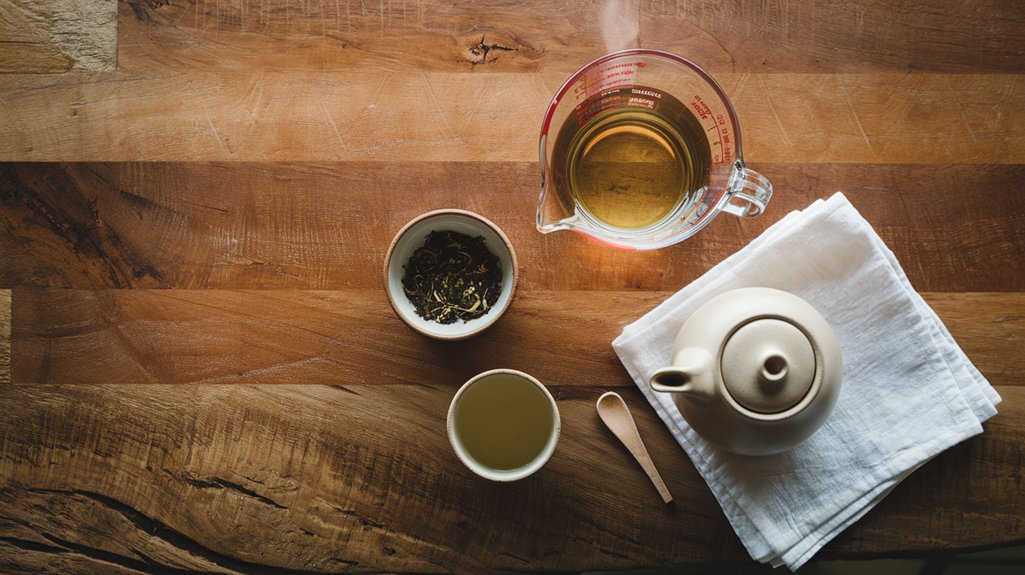
While the water is boiling, it’s important to remember that the temperature plays a critical role in brewing green tea correctly.
Using water that’s too hot can destroy the delicate compounds in green tea, reducing its health benefits.
Allow it to cool slightly, aiming for a temperature between 160°F and 180°F, to maintain its antioxidant properties and taste.
| Temperature (°F) | Benefits |
|---|---|
| 160 | Preserves flavor |
| 170 | Enhances aroma |
| 175 | Balances taste |
| 180 | Maximizes benefits |
| 185+ | Risk of bitterness |
Step 2. Add Tea Leaves Carefully
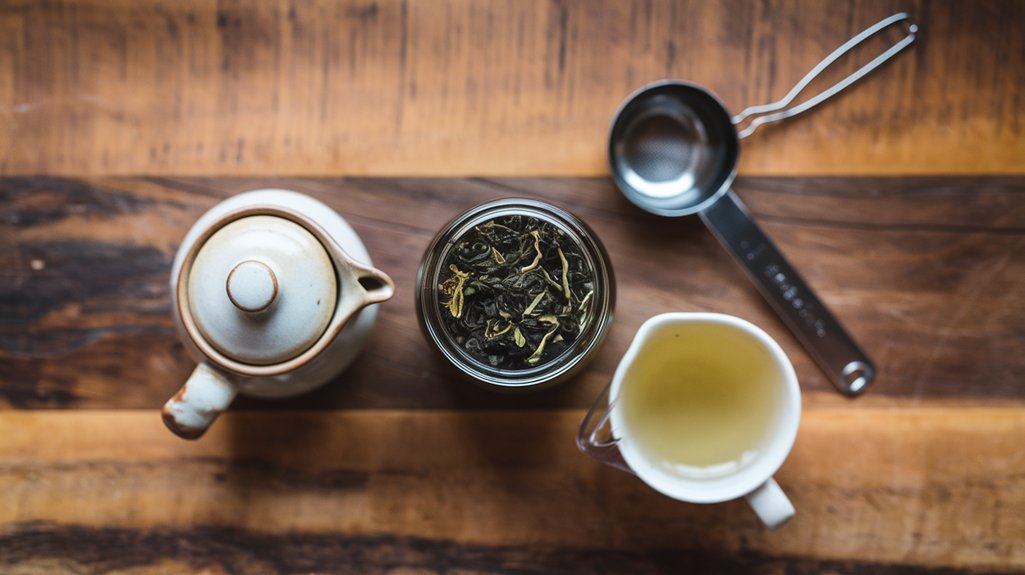
When you’re ready to brew, take care to add the green tea leaves gently to your teapot or cup. This careful approach is key to preserving the tea’s delicate flavors and health benefits.
Handling the leaves softly helps maintain their structure, which is essential for releasing beneficial compounds and achieving a well-balanced taste.
Consider these tips:
- Measure accurately: Use one teaspoon per cup for ideal flavor.
- Choose quality leaves: High-quality leaves guarantee a fuller taste and more antioxidants.
- Keep them dry: Store leaves in a cool, dry place to retain freshness.
- Mind the temperature: Avoid boiling water; it can scorch the leaves, leading to bitterness.
Step 3. Steep for Precise Flavor
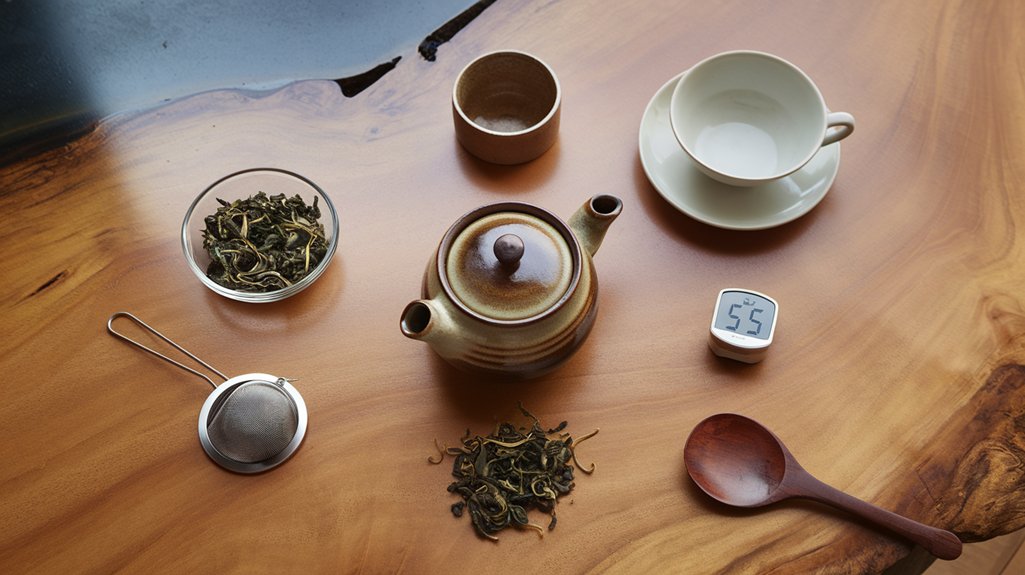
Achieving the perfect green tea flavor hinges on precise steeping, a step that can greatly affect the tea’s taste and health benefits.
Start by pouring water, heated to 160°F-180°F, over the tea leaves. Steep for exactly 2 to 3 minutes to extract the ideal nutrients and flavors.
Steeping too long can lead to bitterness and reduced health benefits, while too short a time might not fully release the tea’s antioxidants.
Here’s a quick guide:
| Water Temperature | Steeping Time | Flavor Outcome |
|---|---|---|
| 160°F-180°F | 2 minutes | Mild, Sweet |
| 160°F-180°F | 3 minutes | Balanced, Grassy |
| 160°F-180°F | 4 minutes | Strong, Bitter |
Adjust the steeping time to suit your preference but remember, balance is key for both taste and health.
Final Thoughts
Ultimately, the ritual of preparing green tea is as much about mindfulness as it’s about taste.
Engaging in this simple yet intentional process can be a moment of calm in your day, enhancing both well-being and enjoyment.
Green tea is rich in antioxidants, which studies suggest may support heart health and boost metabolism.
It’s a versatile beverage that can fit into any lifestyle, whether you’re enjoying it hot to unwind or iced to refresh.
Consider the following when making green tea:
- Quality matters: Choose high-quality leaves for the best flavor and benefits.
- Temperature control: Use water that’s not too hot to avoid bitterness.
- Steep time: Adjust to your taste preference.
- Hydration: Remember, it counts towards your daily fluid intake.
Frequently Asked Questions
Can Green Tea Help With Weight Loss?
Green tea might aid weight loss by boosting metabolism and fat oxidation. However, don’t rely solely on it for weight loss. Combine it with a balanced diet and regular exercise for effective results. Consult a healthcare professional for personalized advice.
What Are the Health Benefits of Green Tea?
You’ll find green tea offers antioxidants that combat free radicals, support heart health, and improve brain function. It may aid weight management and reduce cancer risks. Remember, it’s part of a balanced diet, not a miracle cure.
Is It Okay to Add Honey to Green Tea?
Yes, you can add honey to green tea for a natural sweetness. It enhances the flavor without overwhelming it. However, use sparingly to maintain the tea’s health benefits and avoid excessive sugar intake.
How Much Caffeine Is in Green Tea?
You’re wondering about green tea’s caffeine content. Typically, it contains about 20-45 milligrams per 8-ounce cup. This varies with leaf quality and brewing time. It’s less than coffee, offering a gentler energy boost without jitters.
How Should I Store Green Tea Leaves?
Store green tea leaves in an airtight container, away from light, heat, and moisture. Keep them in a cool, dark place to preserve freshness and flavor. Regularly check for any signs of degradation to guarantee peak quality.